
Wastewater treatment methods at plants Process Engineering Department of Company X, an engineering company
Reduce fuel cost and CO₂ emissions
Innovative catalyst technology for efficient wastewater treatment
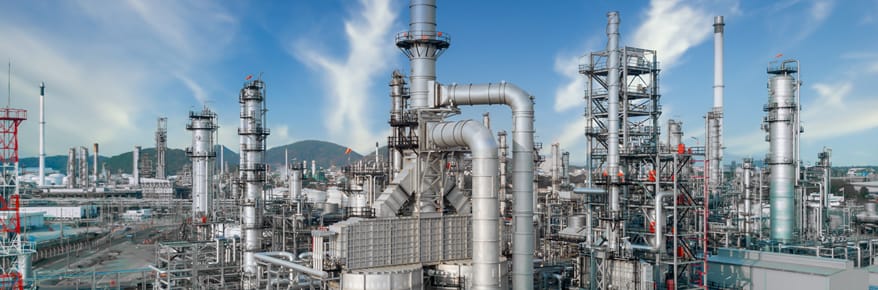
Mr. S, a senior process design engineer at Company X—which designs, builds, and maintains plants in Japan and overseas—was recently consulted by the sales department. A client involved in one of his projects requested a wastewater treatment solution that would significantly reduce fuel consumption in response to rising fuel prices.
* This is a hypothetical example posted as a reference for those with similar challenges
Challenges
We want to reduce fuel costs, but we can’t find a compact wastewater treatment solution…
Mr. S of engineering company X is a veteran engineer in the process design department and is responsible for selecting and designing plant equipment.
One day, a sales representative approached Mr. S with the following request:
“For a new chemical plant project, the client is asking for a wastewater treatment system that addresses the recent increase in fuel prices. They want equipment that is compact, reduces operating fuel consumption, and lowers CO₂ emissions. Do you have any viable treatment methods we can propose?”
Motivated by the growing demand for energy cost reduction and CO₂ mitigation, Mr. S began researching alternative wastewater treatment technologies that could replace the conventional methods used to date.
When evaluating wastewater treatment facilities, it is necessary not only to meet regional wastewater regulations but also to consider environmental impact, installation cost, and operational expenses.
Company X's track record to date has included incineration and biological treatment. Although incineration can handle a wide range of wastewater, including high-concentration wastewater, it requires fuel costs for combustion and emits a considerable amount of CO2. In addition, depending on the combustion conditions, SOx and NOx may be contained in the exhaust gas, which poses the issue of additional costs for treating these.
On the other hand, biological treatment is suitable for low-concentration, easily biodegradable wastewater, but it requires storage in a treatment tank for a certain period of time in order to use microorganisms to decompose the wastewater. This requires a large storage tank (pool), which often requires a large amount of installation space. In addition, there are restrictions such as the inability to treat some types of harmful substances in the wastewater, or the need to dilute it with a large amount of water to treat it effectively.
In addition, both methods require operational management during the treatment process, which generally requires a dedicated operator, resulting in labor costs.
Mr. S believed that CO2 reduction and space-saving, compact treatment equipment would be major selling points when proposing to customers, and he became even more convinced of the need for a new wastewater treatment method.
Key Challenges
Rising fuel prices created demand for a compact wastewater treatment solution that significantly reduces fuel consumption and CO₂ emissions.
Conventional incineration and biological treatment methods cannot meet space‑saving or cost‑reduction requirements.
A solution capable of stable, low‑maintenance operation without dedicated operators was required.