
Enhanced adhesion of water-based inks Development Department of Company A, a Packaging Film Manufacturer
Using water-based inks for film printing faced technical hurdles
Breakthrough polymer improved ink fixation and scratch resistance
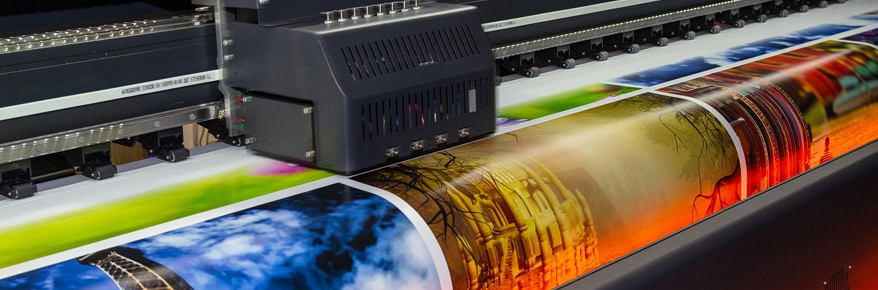
Due to changes in consumer lifestyles, the use of soft packaging materials such as individual food packaging and small packages is increasing. Digital printing such as inkjet printing, which does not require plates, is advantageous for printing these small quantities of a wide variety of products. Packaging film manufacturer, Company A, has also been receiving an increasing number of inquiries about inkjet printing from food and printer manufacturers, and the development department of Company A has been busy responding to them.
Challenges
I want to use water-based ink for safety reasons, but it doesn't adhere well to film materials...
Many of the inquiries we received were about whether there were any film materials for flexible packaging that were safe and had excellent printability with water-based inks. This was because, due to the fact that food is the target of packaging, as well as the environmental impact and worker exposure issues, there has been an increasing trend in recent years to switch from solvent-based inks to water-based inks. However, water-based inks have drawbacks such as insufficient scratch resistance and low yield.
The development department immediately decided to print using water-based ink on several common film materials and evaluate them. Mr. N, one of the development department members, describes the situation at that time as follows:
"After repeated evaluation, we confirmed that compared to conventional solvent-based inks, the adhesion between the pigments and resins in the ink and the substrate film, such as soft ethylene or OPP (oriented polypropylene), which has low polarity, is low, making it difficult for the ink to adhere."
Therefore, in order to improve adhesion, they tried applying some anchor coating agents to the surface of the film. However, when Mr. N and his team tried using an isocyanate-based anchor coating agent, which they had knowledge of, they were able to improve adhesion, but safety concerns remained.
Mr. N and his team continued gathering information, thinking that there might still be information we've missed.
Key Challenges
I want to change the ink used for film printing from solvent-based to water-based, but the ink has insufficient scratch resistance, poor adhesion, and poor yield.
The well-known isocyanate-based anchor coating agent improves adhesion, but safety concerns remain.