
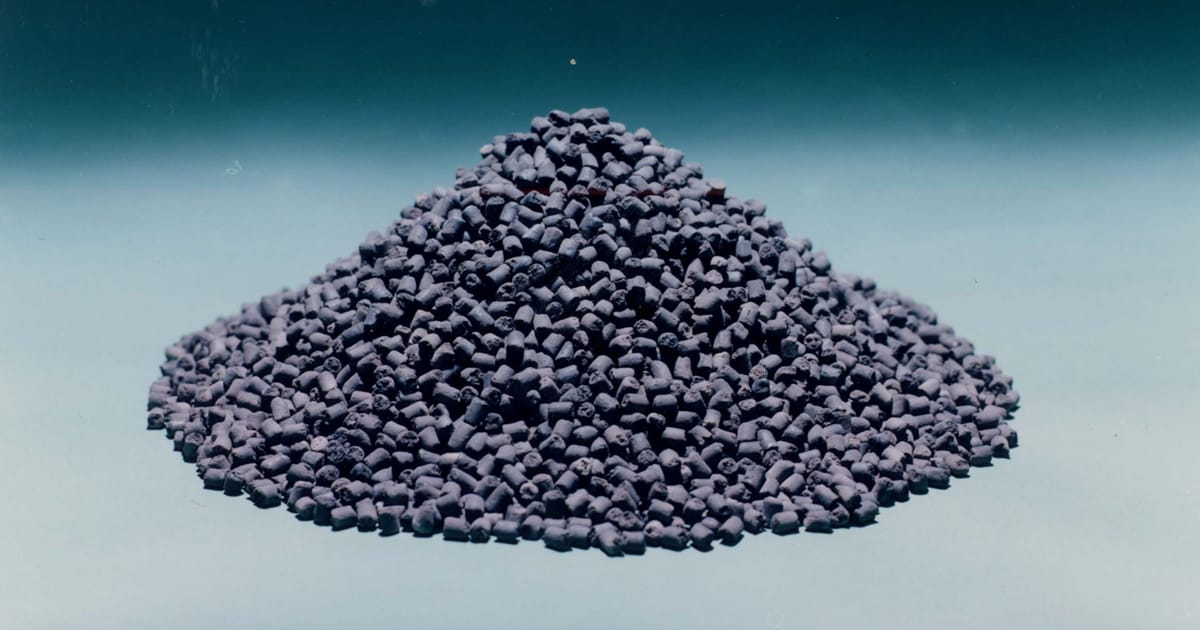
Catalyst for wet oxidation wastewater treatment (Catalyst for CWAO)
Wastewater treatment technology attracting attention for reducing CO2 emissions and running costs compared to incineration
Find our more
Wastewater treatment methods at plants Process Engineering Department of Company X, an engineering company
Innovative catalyst technology for efficient wastewater treatment

The solid catalyst for wet oxidation wastewater treatment (CWAO) developed by Nippon Shokubai is a key material for wastewater treatment methods that can replace incineration.
Compared to incineration, CWAO reduces fuel costs and CO2 emissions, and does not require a dedicated operator.
By combining with biological treatment, a wider range of substances can be treated, enabling advanced wastewater treatment.
At a water treatment-related exhibition, the "catalyst for wet oxidation wastewater treatment (CWAO catalyst)" exhibited by Nippon Shokubai caught the attention of Mr. S.
I was excited by the catchphrase "An alternative wastewater treatment method to incineration," so I went to their booth to hear more about their "wet oxidation treatment" technology, which uses a solid catalyst they developed in-house, and learned that they have been receiving more inquiries recently because it can significantly reduce fuel costs and CO2 emissions.
This "catalytic wet oxidation wastewater treatment (CWAO)" recycles the heat generated by the oxidation reaction caused by the catalyst, so if the wastewater concentration is above a certain level, the treatment is energy independent, and under those conditions, fuel costs are essentially zero. Because the energy input for treatment is small, it is possible to significantly reduce CO2 emissions, and the equipment can be installed in a small space.
Furthermore, since the technology does not require monitoring of the treatment process or a dedicated operator, has a track record of supplying products for over 30 years, and is being adopted by companies not only in Japan but also overseas, Mr. S decided to gather members from his company and go to Nippon Shokubai to hear more about it.
Mr. S immediately made an appointment with Nippon Shokubai and held a meeting.
There, he learned that it was possible to provide a preliminary evaluation of samples of the components in the treated water, and that a wider range of components could be treated in advanced stages by combining it with biological treatment. In addition to the great benefit of reducing fuel costs, the reduction in CO2 emissions in anticipation of a carbon-neutral society and the space-saving, compact treatment equipment matched his expected selling points, and he felt that he could propose it to a wide range of customers.
Mr. S is currently preparing a presentation for a plant design that incorporates CWAO to propose to a client for an upcoming project.