
POLYMENT™
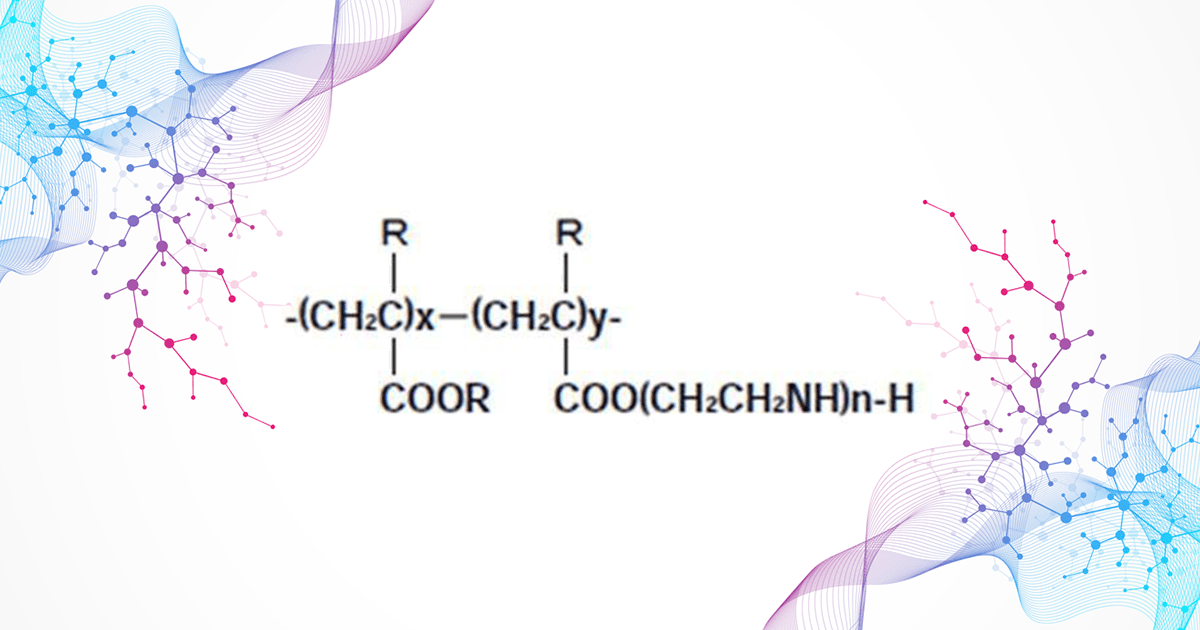
(Aminoethylated Acrylic Polymer)
Adhesives and anchor coatings for different materials
Primary and secondary amino groups strengthen adhesion!
Find our more
Adhesion to substrate materials Research and Development Department of Company J, a electronic materials manufacturer
Adhesion improvement of low-dielectric substrates and copper
Nippon Shokubai 's polymer "POLYMENT™" has primary and secondary amino groups that improve adhesion to a wide range of materials.
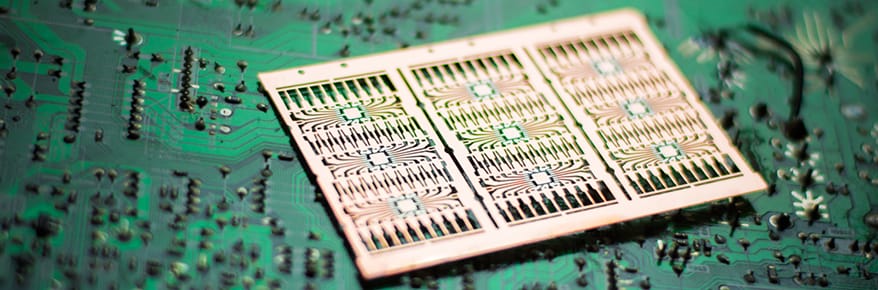
When POLYMENT™ was used as a primer, adhesion between low-dielectric materials and copper foil, which had been difficult to achieve, was improved.
While gathering information, Mr. A heard from a person in charge at a chemical trading company that he did business with Nippon Shokubai 's "POLYMENT" was effective for bonding metals such as copper. Intrigued, Mr. A immediately contacted Nippon Shokubai.
POLYMENT is a polymer manufactured and sold exclusively by Nippon Shokubai, and is expected to have high adhesion to a wide range of materials due to the hydrogen bonds derived from the NH of the primary and secondary amino groups. It can also form a strong film on its own and can be used as both an adhesive and a primer. Mr. A hoped that using this polymer might solve the problems he was facing.
We immediately obtained samples from Nippon Shokubai and began producing prototype printed wiring boards.
"By applying POLYMENT as a primer to the copper foil, the adhesion between the board and the copper foil, which had been difficult to achieve before, was greatly improved." (Mr. A)
Mr. A and his development team saw potential in these results and decided to continue development using POLYMENT. Now that the team has achieved a solution to the problem of bonding the board material and copper foil, they are moving forward with development to make further improvements in preparation for commercialization.
With the problem of developing high-performance printed wiring boards in sight, Mr. A decided to tackle a new development theme: adhesives.
"In addition to improving productivity, our company also needs to consider how to address environmental issues and energy conservation. In particular, while customers in a wide range of fields are calling for reduced VOCs, we had not found a material that was both VOC-free and had good adhesion. In developing a VOC-free adhesive, Nippon Shokubai proposed a newly developed VOC-free water-based POLYMENT, and we have been studying it after receiving samples. By using water-based POLYMENT, we expect to achieve high adhesion, as well as reduce the environmental impact during coating and the costs of solvent recovery and drying equipment." (Mr. A)