
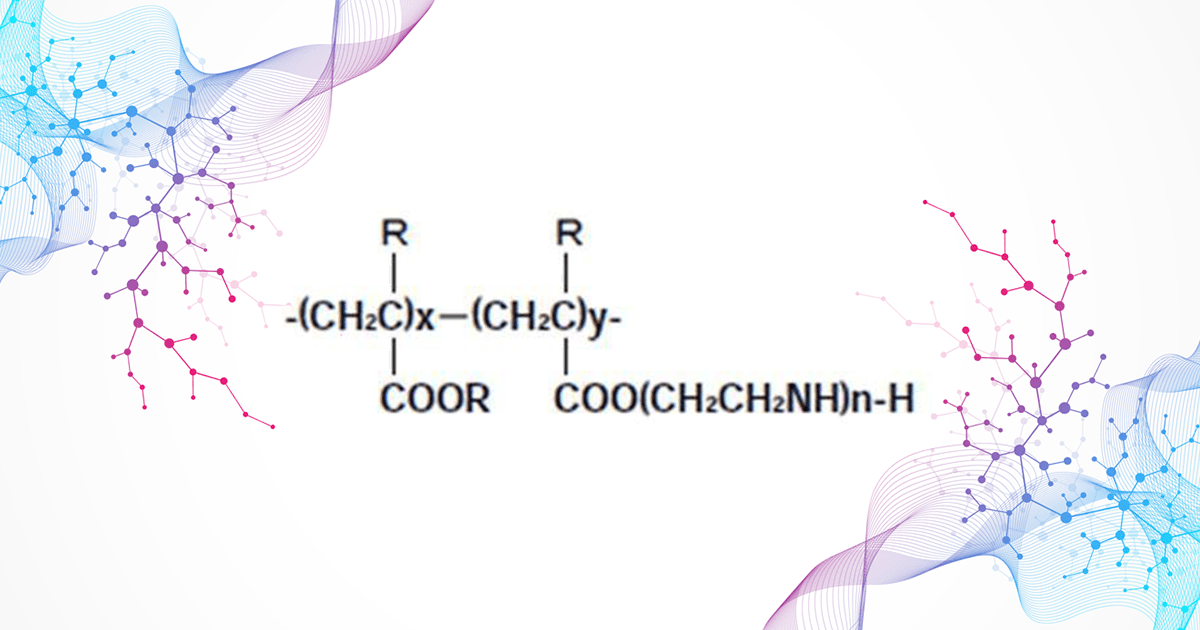
POLYMENT™
(Aminoethylated Acrylic Polymer)
Adhesives and anchor coatings for different materials
Primary and secondary amino groups strengthen adhesion!
Find our more
VOC reduction in water-based inks Research and Development Department of Company K, a ink manufacturer
VOC-free binder improves safety and adhesion
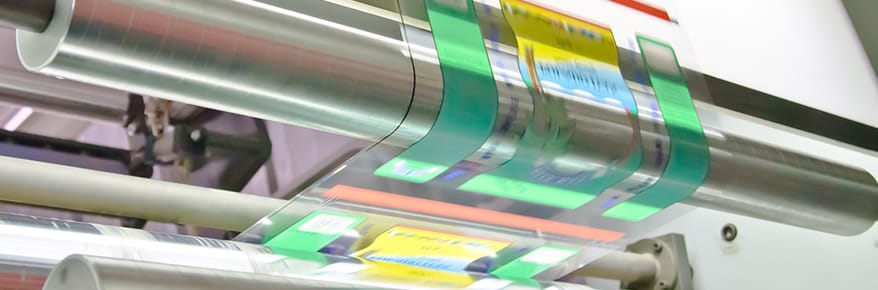
"POLYMENT™" has high reactivity derived from primary and secondary amino groups and excellent adhesion to various substrates.
The newly developed VOC-free water-based emulsion type is odorless and improves work safety.
By using "POLYMENT™" as a binder, we were able to create an ink with high adhesion.
While Ms. Y was gathering information, she noticed Nippon Shokubai 's "POLYMENT" on a database site on the web. Intrigued by the information that "POLYMENT" has primary and secondary amino groups as functional groups and has excellent adhesion to various substrates, Ms. Y immediately contacted Nippon Shokubai.
According to a sales representative from Nippon Shokubai, "POLYMENT" is a proprietary polymer Nippon Shokubai that combines the characteristics of acrylic and primary and secondary amino groups, and is expected to have high adhesion to PP film. Furthermore, they have also developed a VOC-free water-based emulsion type, an improved version of the water-dilutable type that is not yet listed on the database site, and they can also provide product numbers that test negative in the Ames test.
"By using POLYMENT, we could create a water-based ink that solved issues such as adhesion, and by using a VOC-free water-based emulsion type, we could also meet the needs of customers who strongly wanted to reduce their environmental impact." (Ms. Y)
Ms. Y and her team immediately ordered samples and began evaluation. When they tried creating a prototype water-based ink using the VOC-free water-based emulsion "POLYMENT" as a binder, they found that, as expected, it improved adhesion to PP film. There was also no odor associated with the solvent, improving safety during use and promising a significant reduction in VOC emissions at printing facilities.
Feeling a great response, Ms. Y and her team "were able to see the results of creating the VOC-free ink they wanted, so we proposed a prototype to the client. The client's response was also very positive, as they were able to promote the ink by labeling it with marks such as "VOC-free ink" or "non-VOC ink," and they were pleased that it would also enable major cost reductions by eliminating the need for exhaust gas treatment at the printing facility and explosion-proof facilities for the printing process.
Company K has decided to proceed with commercializing ink using "POLYMENT" and is currently finalizing the ink product specifications and manufacturing conditions.
"Furthermore, we are looking into new applications for POLYMENT, as the amino group in Polyment has a high affinity with pigments, and we believe it may be useful as an ink fixing layer for inkjet printing, which is seeing growing demand, and may help prevent ink bleeding." (Ms. Y)
Company K has begun consultations with Nippon Shokubai regarding a research topic on ink fixing layers using "POLYMENT."